For many brands selling on Zalando, pricing is still treated as a simple lever: lower the price, gain visibility, sell more.
In practice, this approach often leads to the opposite result. Products lose margin without gaining sustainable visibility. Rankings fluctuate without a clear explanation. And internal teams struggle to understand why “doing the obvious thing” doesn’t deliver the expected outcome.
The reason for this is because on Zalando, visibility isn’t driven by being cheapest. It comes from having the right price in the right context, which is what ultimately determines whether a product reaches and stays on Page 1.
The myth of lowest price
It’s easy to assume that lower prices automatically improve ranking. After all, price is a visible signal to customers, and promotions clearly drive short-term demand. But on Zalando, price is only one part of a broader system.
Ranking and visibility are influenced by how a product performs relative to its category, its competitors, and current consumer behaviour. That means a product priced significantly below the market does not necessarily gain an advantage. In some cases, it can even lose visibility.
Why? Because extreme pricing often sends the wrong signals.
Deep discounting can reduce perceived value, hurt conversion over time, and distort performance metrics that the marketplace algorithm relies on. Instead of appearing competitive, the product risks being interpreted as misaligned with the category.
Median price matters more than minimum price
One of the most overlooked aspects of marketplace pricing is price position, not price level.
On Zalando, products are constantly evaluated against a category specific price distribution. Being reasonably aligned with the median price range is often more important than being the cheapest option available.
When pricing falls too far below or above the prevailing range, performance signals can weaken:
- Conversion rates may drop if the price feels “off” for the category
- Engagement decreases when the price does not match customer expectations
- Visibility can suffer as the product no longer performs like its peers
In other words, pricing needs to make sense in context, not in isolation.
Psychological pricing still plays a role
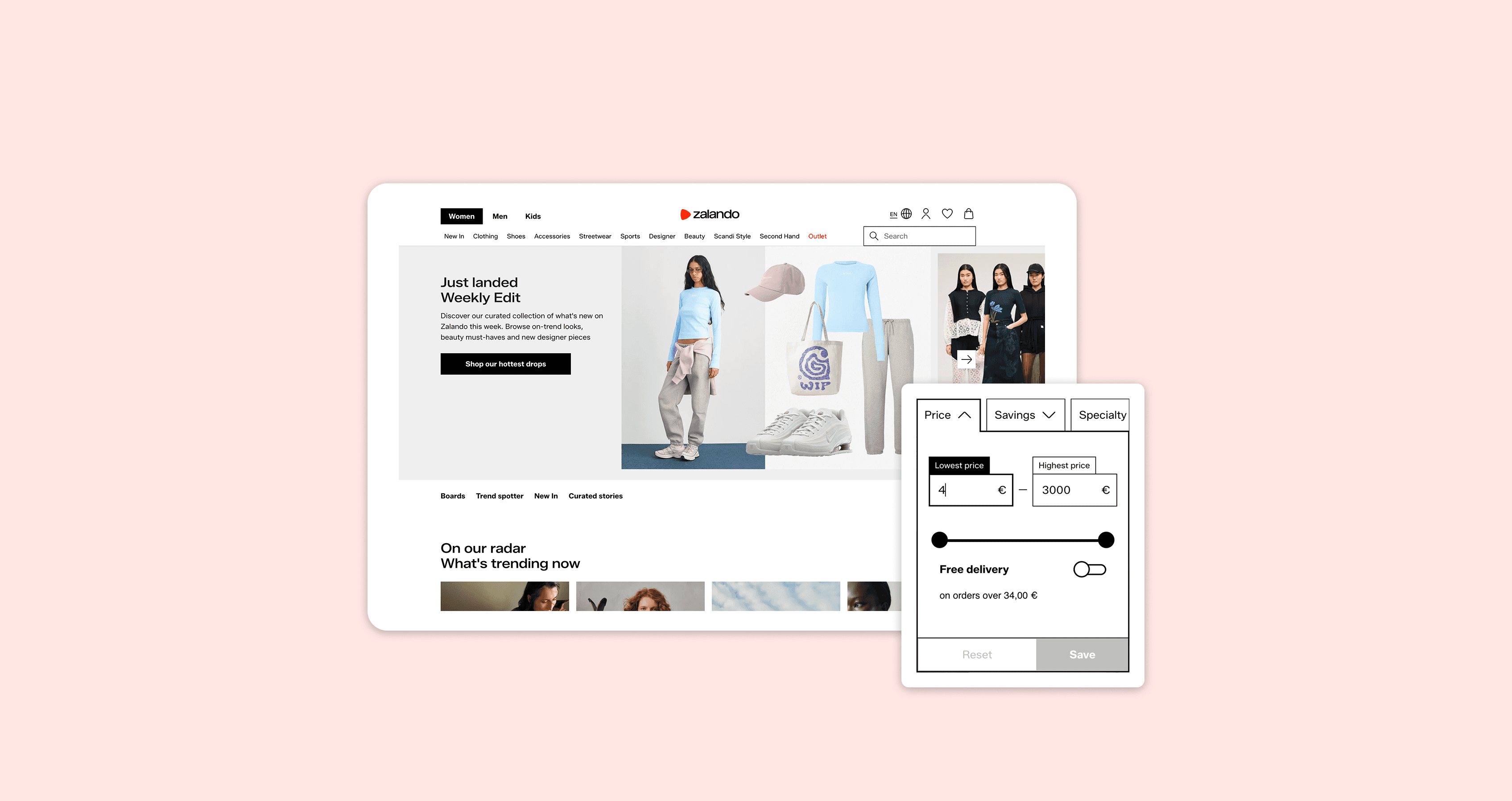
Price perception is not purely rational, and marketplace algorithms indirectly reflect this. Common psychological price points, such as pricing just below major thresholds, still influence customer behaviour. These thresholds often align with Zalando’s filtering and browsing patterns, where customers narrow their search by price bands.
Hitting the right psychological range can improve click-through rates and conversion, which in turn strengthens ranking signals. Missing those thresholds, even by a small margin, can reduce visibility without any obvious explanation in reporting.
This is one of the reasons pricing decisions need to be evaluated at SKU level, not just category or brand level.
Promotions amplify signals, not fix pricing
Promotions and markdowns remain a powerful tool on Zalando, but they work best when applied strategically. Discounts amplify existing signals. They do not correct fundamentally misaligned pricing.
Short-term promotions can improve visibility on Zalando when:
- the base price is already competitive within the category
- the product matches current demand patterns
- availability and fulfillment are consistent
However, frequent or poorly timed promotions can have the opposite effect. They train customers to wait, weaken long-term price perception, and create volatility in performance metrics that are difficult to explain internally.
Pricing as a performance signal, not a standalone decision
The key shift is to stop treating pricing as an isolated decision and start treating it as a performance signal. On Zalando, pricing works together with:
- category expectations
- consumer psychology
- promotional activity
- availability and conversion behaviour
When these elements are aligned, Page 1 visibility becomes more stable and predictable. When they are not, pricing adjustments alone rarely solve the problem.
Learn more
If you want to go deeper into how pricing actually influences ranking and visibility on Zalando, and how to build a pricing strategy that supports marketplace performance without sacrificing margin — download our whitepaper:
Finding the right price strategy on Zalando
FAQ
Is being the cheapest product the best way to reach Page 1 on Zalando?
No. Zalando does not reward the lowest price in isolation. Visibility is influenced by how a product performs relative to its category, competitors and consumer behaviour. Extreme pricing can weaken performance signals and reduce ranking stability.
Why does median price matter more than minimum price?
Products are evaluated against a category-specific price distribution. Being reasonably aligned with the median price range often leads to stronger conversion and engagement than being significantly cheaper or more expensive than comparable products.
How do psychological price points affect visibility?
Common psychological thresholds influence how customers filter, click and convert on Zalando. Small differences around these price points can meaningfully impact behavioural signals that feed into ranking algorithms.
Do promotions improve ranking on Zalando?
Promotions can amplify existing performance signals, but they do not fix misaligned base pricing. Discounts are most effective when the underlying price position already makes sense within the category and demand context.
Why should pricing be managed at SKU level?
Pricing effects vary by product, category and timing. SKU-level evaluation allows teams to understand how individual pricing decisions influence conversion, engagement and visibility, rather than relying on broad category or brand averages.
How should teams think about pricing on Zalando?
Pricing should be treated as a performance signal rather than a standalone decision. It works together with category expectations, consumer psychology, promotions, availability and conversion behaviour to determine visibility and ranking outcomes.
Summary:
Reaching Page 1 on Zalando is not about offering the lowest price. Visibility is driven by how pricing performs in context, including category expectations, median price positioning, consumer psychology and promotional timing. Products priced too far above or below the category norm can lose conversion, engagement and ranking stability. Strategic pricing at SKU level, aligned with demand, availability and promotions, is essential for sustainable marketplace performance.